
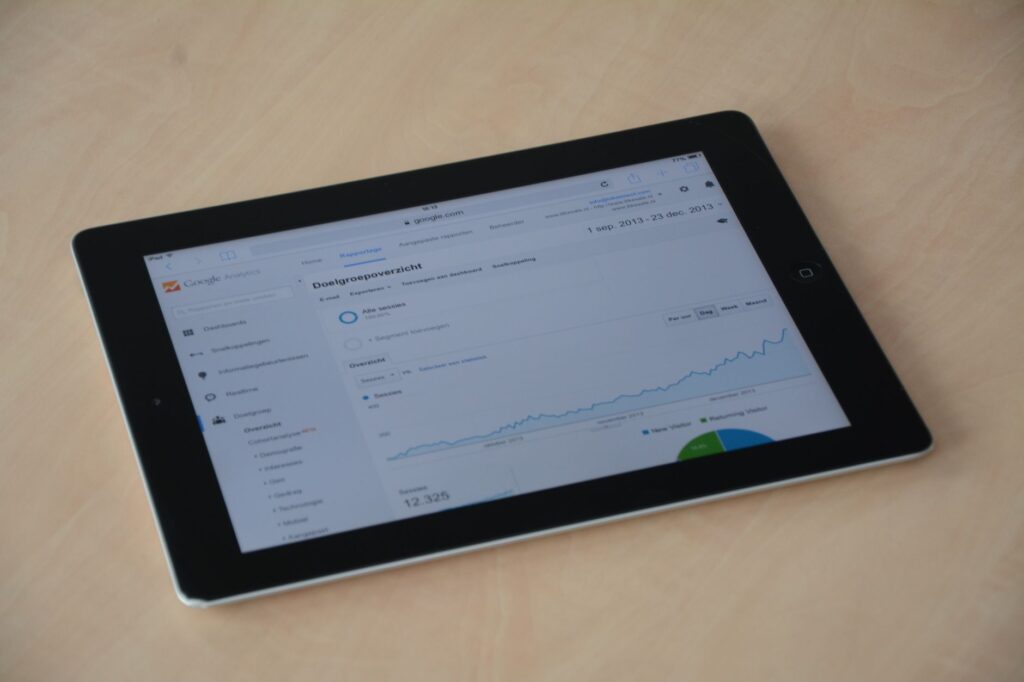
If you own or manage a website in India — whether it’s a blog, a startup’s landing page, an e-commerce store, or a portfolio — you need to know how your visitors are behaving. Web analytics tools are how you get that picture. And while Google Analytics 4 has long been the default choice, a new generation of privacy-first, lightweight alternatives has emerged that many Indian website owners are now switching to.
In this comparison, I’ve researched and compared the four most talked-about free (or freemium) web analytics tools in 2026: Google Analytics 4, Plausible Analytics, Umami, and Fathom Analytics. Here’s everything you need to know to pick the right one for your site.

Why Web Analytics Matters More Than Ever in 2026
Analytics aren’t just for big companies. If you’re publishing content, running ads, or trying to grow an audience, you need to understand: which pages get the most traffic, where your visitors come from, how long they stay, and which content or pages lead to conversions.
Without this data, you’re essentially flying blind. You might be writing blog posts that nobody reads, or running ads that bring in the wrong audience, or missing the fact that your most popular page has a broken CTA. Analytics tools surface all of this.
In 2026, with increasing user privacy awareness (GDPR in Europe, DPDP Act in India), there’s also a growing need to choose tools that handle data responsibly — not just for compliance, but for user trust.
Quick Comparison at a Glance
- Google Analytics 4: Free, powerful, steep learning curve, privacy concerns, AI-powered insights
- Plausible Analytics: Privacy-first, simple UI, paid from $9/month, GDPR compliant, no cookie banner needed
- Umami: Open-source, self-hostable, free if you host it yourself, privacy-friendly, good for developers
- Fathom Analytics: Privacy-first, paid from $14/month, extremely simple, excellent uptime, built for non-technical users
Google Analytics 4 (GA4)
What It Is
GA4 is Google’s current analytics platform, which replaced Universal Analytics in 2023. It’s built on an event-based data model (rather than session-based), integrates tightly with Google Ads, and includes AI-powered predictive metrics like churn probability and purchase likelihood.
Strengths
- Completely free — no cost for standard use, even for high-traffic sites
- Deep integration with Google ecosystem — connects natively with Google Ads, Search Console, BigQuery, and Looker Studio
- Powerful exploration and reporting — the Exploration section lets you build custom funnels, path analysis, and cohort reports that rival enterprise tools
- AI-powered insights — anomaly detection, predictive audiences, and automated insights surface trends you might miss
- Best for ad-heavy websites — if you’re running Google Ads or Meta Ads and need conversion tracking, GA4 is still the most feature-complete free option
Weaknesses
- Complex interface — GA4’s UI has a significant learning curve. Many website owners find it confusing compared to the old Universal Analytics
- Privacy concerns — GA4 uses cookies, sends data to Google’s servers, and requires a GDPR/DPDP-compliant cookie consent banner
- Data sampling on free tier — high-traffic sites may see sampled data in some reports, reducing accuracy
- Data retention limit — the free tier only stores event-level data for 14 months by default (configurable to 2 months or 14 months)
Best For
Websites running Google or Meta Ads, e-commerce stores, and larger blogs that need deep funnel reporting and are comfortable with a learning curve.
Plausible Analytics
What It Is
Plausible is a European privacy-first analytics tool built as a clean alternative to GA4. It’s fully GDPR-compliant, uses no cookies, and doesn’t track individual users — meaning you don’t need a cookie consent banner on your site.
Strengths
- Extremely simple UI — all your key metrics fit on one page: visitors, pageviews, bounce rate, top sources, top pages, and conversions
- No cookie banner required — because Plausible doesn’t use cookies or collect personal data, you’re automatically GDPR and DPDP compliant
- Lightweight script — Plausible’s tracking script is under 1KB, versus GA4’s 28KB+ script. This means zero impact on your page load speed
- Open-source — the codebase is publicly auditable
- Email reports — get weekly email digests with your key stats, without having to log in
Weaknesses
- Paid after free trial — Plausible starts at $9/month for up to 10,000 monthly pageviews (approximately ₹750/month at current exchange rates). Not free long-term.
- Less granular data — no session replays, no heatmaps, and much less depth than GA4 for complex funnel analysis
- No Google Ads integration — if you’re running Google Ads, you can’t import conversion data directly
Best For
Bloggers, content creators, indie developers, and small business websites that value simplicity, privacy compliance, and a clean dashboard — and don’t need deep ad attribution.

Umami
What It Is
Umami is a free, open-source web analytics tool that you can self-host on your own server. It’s privacy-focused, cookie-free, and built for developers who want control over their own data.
Strengths
- Completely free if self-hosted — you run it on your own VPS (a basic DigitalOcean or Hostinger VPS costs ₹500–₹1,000/month), so you own 100% of your data
- Privacy-first by design — no cookies, no personal data collection, GDPR compliant out of the box
- Clean, minimal UI — similar to Plausible in simplicity, easy to read at a glance
- Multi-site support — track multiple websites from one Umami installation
- Custom events — you can track custom button clicks, form submissions, and conversions with simple JavaScript snippets
- Umami Cloud option — if you don’t want to self-host, Umami now offers a managed cloud version starting at $9/month
Weaknesses
- Requires technical setup — self-hosting Umami means dealing with Docker, a PostgreSQL/MySQL database, and a reverse proxy. Not for non-technical users.
- Maintenance overhead — you’re responsible for updates, backups, and server uptime
- Fewer integrations — no native integrations with ad platforms or CRMs
Best For
Developers, technical bloggers, and startups that want full data ownership, can manage a VPS, and want to avoid any ongoing SaaS subscription costs for analytics.
Fathom Analytics
What It Is
Fathom is a Canadian privacy-first analytics tool with a strong focus on simplicity and reliability. It’s completely cookie-free, requires no consent banner, and is built for non-technical website owners who just want the numbers without the complexity.
Strengths
- Simplest UI of the four — even less cluttered than Plausible, one-page dashboard with everything you need
- GDPR, CCPA, and DPDP compliant — no cookies, no personal data, no consent banner needed
- Excellent uptime and reliability — Fathom has a strong reputation for near-100% uptime
- EU isolation option — for teams with EU customers, Fathom can isolate data to EU servers
- WordPress plugin available — easy to install on WordPress sites without touching code
- Email digest reports — regular summaries delivered to your inbox
Weaknesses
- Most expensive of the alternatives — starts at $14/month (approximately ₹1,160/month) for up to 100,000 monthly pageviews
- Less feature depth than GA4 — no funnel analysis, no cohort reports, no heatmaps
- Limited free tier — Fathom only offers a 30-day free trial, not a permanent free plan
Best For
Non-technical website owners, coaches, consultants, and small business owners who want plug-and-play analytics without any setup complexity and are willing to pay a small monthly fee for simplicity.
Which Tool Should Indian Website Owners Choose in 2026?
Here’s my practical recommendation based on different use cases:
- Running Google or Meta Ads and need conversion tracking? → Stick with Google Analytics 4. The deep ad integration and free pricing are unbeatable for ad-heavy websites.
- Running a blog or content site and want zero cookie headaches? → Plausible Analytics is the cleanest, most user-friendly paid option. The $9/month is worth the simplicity.
- Technical enough to manage a VPS and want to own your data for free? → Umami (self-hosted) is the most cost-effective long-term option and gives you full control.
- Non-technical and just want something that works with zero fuss? → Fathom Analytics is the easiest setup, with excellent reliability. Worth the slight premium over Plausible.
The Bottom Line
GA4 remains the most powerful free option, but it comes with complexity and privacy trade-offs that are becoming harder to ignore. For Indian website owners who value simplicity and privacy compliance, Plausible and Umami are excellent alternatives — with Umami being the best free option for developers and Plausible being the best paid option for non-technical users. Fathom is the premium pick for those who want maximum simplicity and are happy to pay a bit more for it.
Whichever tool you choose, the most important thing is that you actually use it regularly. Analytics only helps you grow if you look at the numbers and act on them.