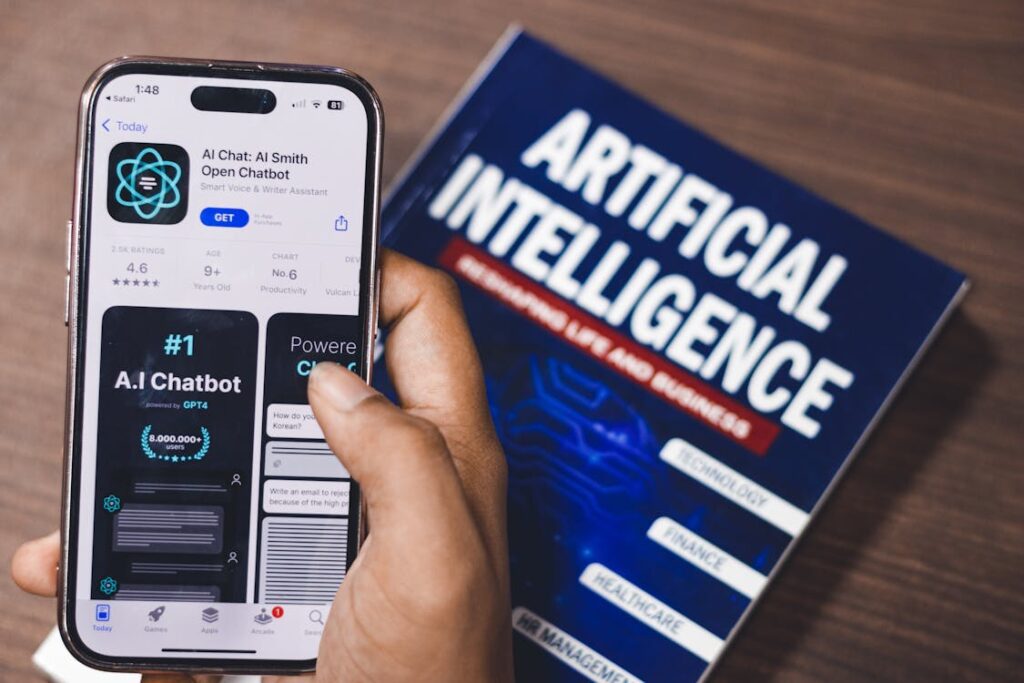

My uncle runs a small accounting firm in Pune. He has seven employees. Last year he called me to ask (seriously) whether he needed to start looking for a new career. He’d read somewhere that AI was going to replace accountants. He was genuinely worried.
I told him the truth: not yet, and probably not completely, and definitely not in the way he was imagining. But I also told him the other truth: some things are changing, some roles are at risk, and ignoring that isn’t smart either.
Here’s the real picture in India in 2026: honest, specific, without either catastrophising or dismissing what’s happening.
What AI is actually replacing right now
Let’s start with what’s factually happening, not what’s being predicted. AI in 2026 is genuinely replacing specific tasks more than entire jobs. The distinction matters.
Data entry and routine document processing, Already largely automated. If your job is primarily entering data into spreadsheets, processing invoices, or filing standardised forms, AI and automation have been doing this better and faster than humans for several years now. This affects a significant number of back-office jobs in India’s BPO and financial services sectors.
Basic content creation, Generic product descriptions, templated reports, boilerplate email responses. Companies are using AI to produce this content at scale. Entry-level content writing jobs that involved producing large volumes of formulaic text have contracted.
Tier-1 customer support, The first-line “what is your order number” conversations are increasingly handled by AI chatbots. This has reduced the volume of straightforward customer service roles in call centres.
Basic code and software testing (Some types of junior developer tasks) writing boilerplate, generating test cases, doing simple code review, are being assisted heavily by AI tools. This doesn’t mean developers are being replaced; it means fewer junior developers are needed to produce the same volume of basic work.
What’s NOT being replaced (and won’t be soon)
Here’s where I push back on the apocalyptic headlines.
Skilled trades and physical work, Plumbers, electricians, construction workers, mechanics, healthcare workers who actually touch patients. AI cannot change a leaking pipe. These jobs are not at risk from AI in any meaningful near-term timeframe.
Complex decision-making roles, A lawyer who makes judgement calls on case strategy. A doctor diagnosing a complex patient with multiple comorbidities. A CA navigating an unusual tax situation. AI can assist these professionals enormously; it cannot replace the accountability, contextual judgment, and relationship trust that comes with the role.
Roles requiring human relationships and trust, Teachers who connect with students. Salespeople who build genuine client relationships. Therapists and counselors. Social workers. These roles have a fundamentally human component that AI cannot replicate: and that clients, patients, and students specifically want from a human being.
Creative work at a high level, AI can generate competent, average creative work at scale. It can’t replace an exceptional art director, a brilliant copywriter, or a filmmaker with a distinct vision. AI has compressed the market for mediocre creative work, but the ceiling for exceptional creative professionals is arguably higher now because AI handles the routine work for them.
The India-specific picture
India’s situation is different from Western countries in important ways.
India has a massive and growing service economy (IT services, BPO, back-office processing) that was, frankly, built partly on cost arbitrage with the West. Some of that cost arbitrage advantage erodes as AI can do certain tasks at near-zero marginal cost regardless of location. This is a real structural challenge for some segments of the Indian economy.

But India also has enormous domestic demand that doesn’t get displaced by AI. An Indian construction worker building infrastructure for India’s growing cities isn’t competing with AI. A teacher in a government school isn’t being replaced. A nurse in a district hospital isn’t threatened. The majority of India’s workforce is in sectors where AI disruption is limited in the near term.
What is at risk is the particular segment of white-collar work that is routine, volume-based, and process-oriented. That’s a real concern for specific segments of the workforce, particularly recent graduates entering fields like basic content creation, data entry, and standardised IT support.
What this means for your career
The honest answer: if you’re doing a job that consists mostly of repetitive, formulaic tasks that follow predictable rules, you should be thinking about how to add skills that AI can’t easily replicate. That’s not panic, it’s prudent.
The more useful frame is: what can you do that AI makes you better at rather than replaces? Professionals who are actively using AI tools to enhance their work are consistently outperforming those who aren’t. A developer who uses GitHub Copilot produces significantly more code per day. A designer who uses Canva AI and Firefly produces more visual work faster. A researcher who uses Perplexity and Claude works through information more quickly.
The people who will be most affected by AI disruption are those who refuse to engage with it. The people who benefit most are those who learn to use it as a tool to amplify their existing skills.
The new skills that matter
If I were advising someone entering the workforce in India today, here’s what I’d focus on:
Prompt engineering and AI literacy, Understanding how to use AI tools effectively is itself a skill that employers increasingly value. It’s not hard to learn, and being genuinely proficient at using AI tools makes you more productive across almost any white-collar role.
Critical thinking and verification, As AI generates more content, the ability to evaluate information critically: to know when something is wrong, to verify sources, to spot inconsistencies: becomes more valuable, not less.
Interpersonal and communication skills, The things AI genuinely cannot do: build trust with clients, navigate difficult conversations, lead teams through uncertainty, read a room. These soft skills are the human advantages that persist.
Domain expertise (Deep knowledge in a specific field) law, medicine, engineering, finance, education, combined with AI literacy creates a powerful combination. An accountant who understands AI tools is more valuable than one who doesn’t; they’re not being replaced by one.
The real answer to the question
Is AI replacing jobs in India? Some. Specific types of routine work are genuinely contracting. That’s real and shouldn’t be dismissed.
Is it replacing most jobs? No. Not now, and not in any plausible short-term scenario for most of India’s workforce.
Will it continue to change the nature of work? Absolutely. The composition of tasks that make up most jobs is shifting, even in jobs that aren’t disappearing.
My uncle’s accounting firm is still running. He’s actually using Tally with AI plugins now to handle routine reconciliation work faster, which has freed up his team to do more complex advisory work. He’s not less employed, he’s more productive. That’s the more common story, if people choose to engage with the change rather than resist it.